

Digital Fashion Weeks Grapple With Stragglers – WWD - WWD |
- Digital Fashion Weeks Grapple With Stragglers – WWD - WWD
- Modest fashion struts the catwalk - DW (English)
- We Wore What? Centuries of Global Fashion as a System of Power - The New York Times
| Digital Fashion Weeks Grapple With Stragglers – WWD - WWD Posted: 08 Feb 2021 09:03 PM PST How are digital fashion weeks like cell phones? To some extent, they removed the absolute necessity of showing up on time, which has led to a more splintered calendar in the key capitals of New York, Milan and Paris. Celine, Acne Studios and Off-White were among brands that dropped out of the recent men's fashion week in Paris and opted to show later, while Maison Margiela said it would unveil its spring couture and fall coed ready-to-wear collections after their respective fashion weeks — exact dates still TBD. Citing "technical reasons," Versace said it would broadcast its fall 2021 coed collection on March 5, after the women's shows in Milan, but not affiliated either with Paris Fashion Week, scheduled for March 1 to 9. According to Donatella Versace, "being a digital event has its advantages. One of them is the possibility of connecting with your audience whenever you think is the right moment." The recently released American Collections Calendar also reflects the fact that numerous designers will unveil their new lines well after the official New York Fashion Week schedule, which runs from Feb. 14 to 17. There are even a few early birds. Fashion week organizers in Europe argue that it's a tiny minority of brands that fall out of the fixed schedule, either by design or because of production or technical delays in the wake of the pandemic and its many restrictions. Meanwhile, data from ListenFirst suggests that enormous audiences for digital fashion shows can be found outside of the organized weeks. According to its tallies, the full runway livestream that generated the most YouTube views in 2020 was the desert-themed Saint Laurent women's show for spring 2021, which was uploaded on Dec. 15 — more than two months after Paris Fashion Week, in which it normally participated pre-pandemic. "Yves Saint Laurent has 16 million fans or followers on social media — they can reach their audience on social media about a new collection without needing the amplification of a formal fashion week," said Lisa Grant Damico, director of account management at ListenFirst. Similarly, Dolce & Gabbana, which counts 43.6 million fans or followers on social media, garnered more than 200,000 video views around the YouTube livestream of its fall 2021 men's show, also unaffiliated with Milan Fashion Week. "It's the smaller brands without a built-up social media audience that benefit the most from participating in fashion weeks, and are suffering in the absence of in-person ones," Grant Damico said. In general, the digital fashion weeks that have replaced physical ones during the pandemic "just aren't moving the needle on social media in the same way," she noted. To wit: There were 18,192 tweets that used the hashtag #PFW around Paris Fashion Week between Sept. 28 and Oct 6, 2020, an 87 percent drop from the 139,403 tweets using the hashtag #PFW between Sept. 23 and Oct. 1, 2019. "In that context, there's little advantage from a social media perspective for established fashion brands for sticking to the schedule of traditional fashion weeks," Grant Damico concluded. Indeed, there were pre-pandemic examples of established brands winning the social engagement sweepstakes without participating with what was then New York Fashion Fashion Week. These included Tom Ford, according to ListenFirst. Ralph Toledano, president of the Fédération de la Haute Couture et de la Mode, which organizes Paris Fashion Week, said it would stick to an official calendar whether shows are digital or in-person because it brings a "common rhythm to the industry" as well as "synergies in communication and commercialization" for participating brands and designers. "Having fixed dates obliges the designers to present their collections at a given time, otherwise collections would never be finished as creative teams would keep trying to improve them," Toledano said in an interview. What's more, "being part of the most selective and prestigious fashion week is a major challenge and a fantastic incentive for designers," he argued. "As soon as physical shows start again, the unity in one place and time won't be questioned."  Ralph Toledano Gregoire ELOY/Courtesy Toledano noted that brands that were not ready on time during recent fashion weeks would not be penalized for relinquishing their time slots. "It has indeed happened that some brands did not show during the fashion week, but every time they came back to the official calendar," he said. "We have witnessed a strong interest for brands to belong to the federation's platform initiated last year with Launchmetrics. The platform has become a real media that strongly benefits their visibility. It includes the videos of the official calendar, a magazine, specific events, also collaborations with our partners, cultural institutions and a dedicated space for houses." Adapting to a more splintered fashion calendar, Launchmetrics indicated last week it would only release data some time in March at the "end of the season" instead of upon the closing of fashion weeks in the four main capitals of New York, London, Milan and Paris. Carlo Capasa, president of the Italian Camera della Moda, also touted the "value of comparison" inherent in organized fashion weeks, and the sense of community they foster. "Fashion weeks, whether digital or physical, create a collective energy that makes our system alive," he told WWD. "If everyone went their own way, in a short time you would lose the magic that comes from confrontation or challenge. Young people and new brands would risk having even less access to the market, novelties would find less space, interest in fashion would decrease over time — an interest that is amplified by the union of creative energy that cohabits in a space or at least in a defined time frame." Fashion weeks also serve a professional purpose, Capasa argued. "It gives the opportunity to all of those working in the fashion community to scout the new trends of the season and to have a full picture of what is happening," he explained. "For brands, it is also important because fashion weeks generally aggregate media interest and more buzz and it gives the brand the possibility to show their work in an established environment, which is already known and has a fixed audience." Retail executives have adapted to a more sprawling and irregular slate of digital shows, though few see it as ideal. "With a fragmented calendar, we, as a business, have been agile and have adapted by conducting remote appointments, but it does pose challenges," said Mia Young, chief merchant at Hong Kong-based Lane Crawford. "When travel restrictions are lifted and we go back to in-person shows and buying appointments, we would prefer if brands honor the calendar." "With the shift to virtual fashion weeks, the limitations of a set fashion calendar don't really exist anymore," said Roopal Patel, senior vice president and fashion director at Saks Fifth Avenue. "Given the current environment, we do have the flexibility to see collections off the calendar. As long as brands are fulfilling their delivery needs and working within that timeline, I think it's fine for designers to present their collections in the seasonal time frame. "We would be at a standstill without digital fashion weeks, so I applaud designers for thinking outside of the box and finding innovative ways to engage with us in this new form," Patel added. Natalie Kingham, global fashion officer at Matchesfashion.com, said she is always looking to discover the most interesting design talent "and so it is important to us to ensure that we don't let schedules dictate how we work with them. "Lots of collections are currently being presented via Zoom or other digital platforms which does come with certain challenges — mainly that you cannot see or touch the clothing which is very important," Kingham said. "Whatever form these fashion weeks take going forward, we are determined to ensure that we will continue to have visibility of young and emerging talent around the globe, whether virtual or physical." In the meantime, brands continue to experiment, with Off-White and Rejina Pyo among those to recently step back from fashion weeks and shift to a see-now-buy-now rhythm. Gucci, Balenciaga and Bottega Veneta are among bigger brands that have also unveiled collections at offbeat times in recent months.  Stills from Balenciaga's video game "Afterworld: The Age of Tomorrow." Courtesy of Balenciaga Organizers in Milan and Paris noted that time slots in the early afternoon are most in demand as they offer the best chance of capturing live viewers in Europe, North America and Asia. However, both weeks also have international media and streaming partners able to share their contents in other time zones. In Paris, the rules of the federation dictate that "each brand 'owns' its slot, and a new slot can be allocated to a specific brand only if it becomes available," Toledano noted. "For sure we will get back to in-persons shows — all of us are looking forward to it, the digital feeling will never be the same as the in-person one. But we will keep in the future our recent innovations, as in the next decades, we will live in a phy-gital world." ListenFirst's Grant Damico suggests that the 2:30 p.m. time slot is "in the range of hitting a sweet spot." According to its data, considering the top 10 Louis Vuitton posts that generated the most social media response, 60 percent of them were posted between 3 and 7 p.m. CET, while 70 percent of Chanel's top 10 posts went live between 2 p.m. and 10:30 p.m. CET. "Additionally, there's no month that seems especially bad for sharing fashion content," Grant Damico said, adding a curious qualifier: "It is worth noting that of the top 10 posts that generated the most responses for Chanel, Dior and Louis Vuitton, none of those posts were released on a Thursday." See also:  |
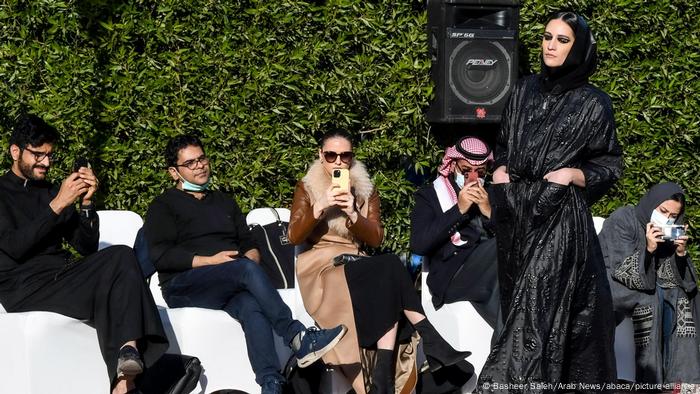
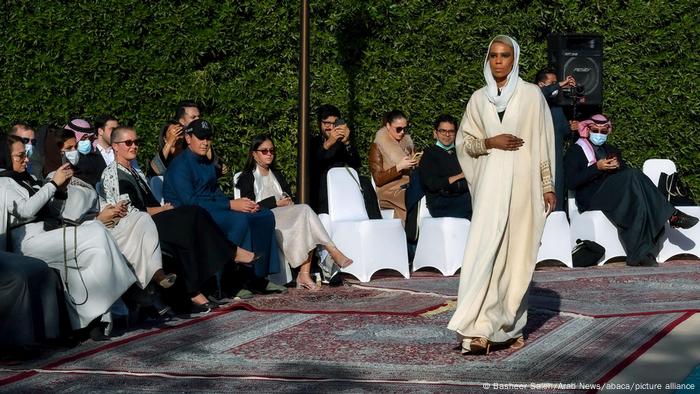
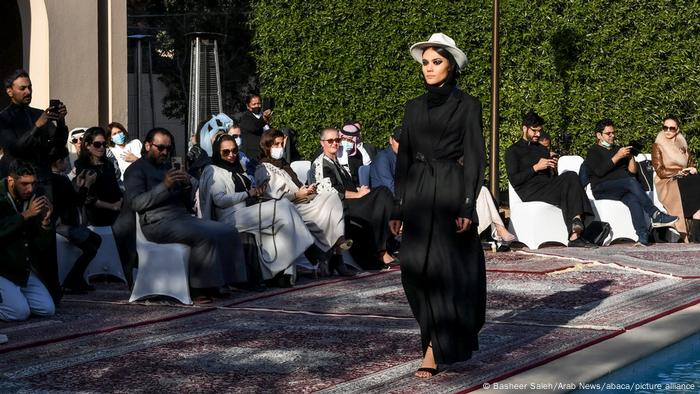
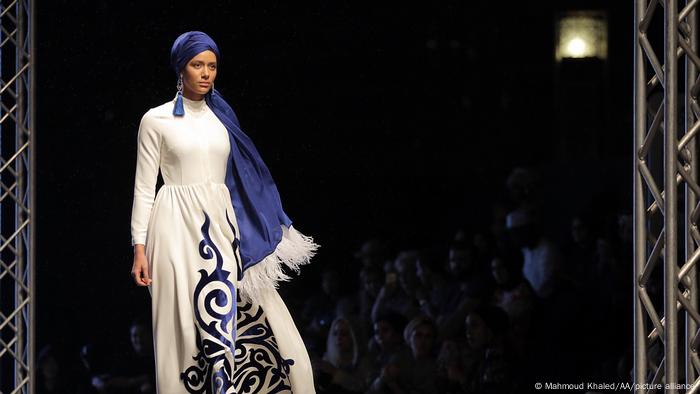
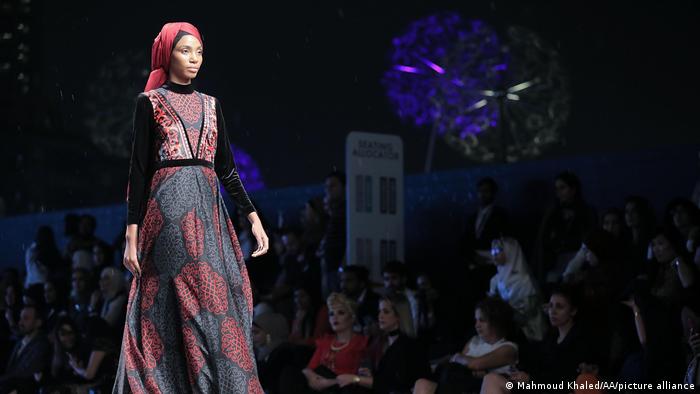
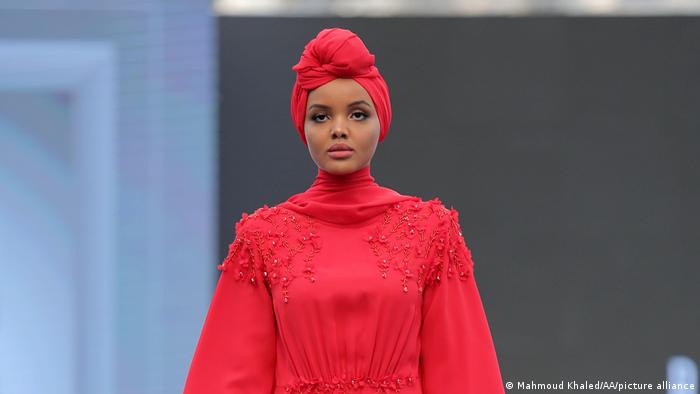
| Modest fashion struts the catwalk - DW (English) Posted: 08 Feb 2021 06:24 AM PST It's only been a few years since conservative Saudi Arabia has started hosting fashion events. At first it was a political signal, because until recently women had little opportunity to use fashion as a form of public expression. The accepted norm was the abaya, a black floor-length cloak, covering their clothes. Recently, the conservative Islamic kingdom has introduced long-awaited advances in terms of equality. Women have recently been allowed to drive their own cars. The football stadium is no longer taboo for women. And in the future, women are to be allowed to set up companies without the permission of a man. 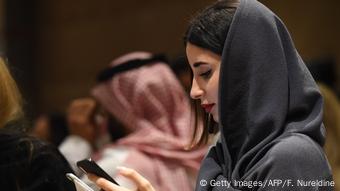 Saudi Arabia hosted its first fashion week three years ago Three years ago, Europe's fashion giants including Jean Paul Gaultier and Roberto Cavalli traveled to Riyadh Fashion Week to present their designs in the luxurious Ritz Carlton Hotel. There, they met Saudi Arabian designers. However, men were not allowed to attend the shows as spectators. And although the fashion industry lives from the fact that newly presented collections are filmed, photographed and distributed in the media — cameras were strictly forbidden. A huge market for fashionThis time, a lot had changed: Orient met Occident on the catwalk in the gardens of the Belgian embassy in Riyadh. Modest fashion, the term used to refer to clothes designed to meet spiritual and stylistic requirements, has long been a household expression on social media — in the USA, Germany, Turkey and even in the Arab countries. The target group are Muslim women, who are developing growing purchasing power. Four years ago, Muslims worldwide spent an estimated $254 billion (€211 billion) on clothing. According to the Global Islamic Economy Report, that should hit $373 billion by 2022. 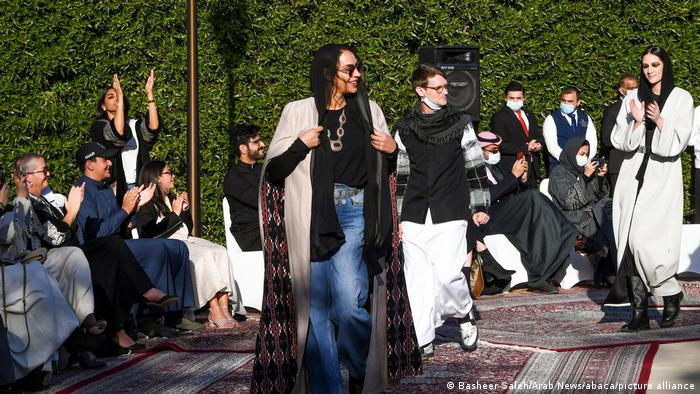 Saudi designer Princess Safia Hussein Guerras presents her Khaleeki Chic collection Western fashion brands such as Nike, Dolce & Gabbana and H&M have long been responding to this trend. European fashion designers are also increasingly working with financially strong partners in the Gulf States. For example, recently the Belgian fashion designer Christophe Beaufays created a collection together with Safia Hussein Guerras, princess of the Saudi royal family. That collection went on show at last year's Modest Fashion event at the Belgian embassy in Riyadh. A selected, mixed-gender audience was invited — a small revolution in Saudi Arabia, where fashion shows usually do not take place in front of a mixed audience. Modest fashion — not without controversyThe phenomenon of "modest fashion" is also controversial. When the exhibition "Contemporary Muslim Fashions" opened in Frankfurt in 2019, women's rights groups accused the Museum of Applied Art of omitting to deal with the fact that oppressive conservative dress codes are also behind the fashion trend. Even now, the collection of Princess Safia Hussein Guerras and Christophe Beaufays renounced too much extravagance. The cowboy hat worn by one model was exciting because it was full of allusions. Other designers showed more courage, and brought bright colors, strong patterns and a lot of glamour to the catwalk, such as Turkish fashion designer Rasit Bagzıbagli, who mainly designs Western fashion. It was not until 2017 that he presented his first collection of modest fashion at the Dubai Modest Fashion Week, with US top model Halima Aden. Meanwhile, the designer has over 400,000 followers on Instagram. Adapted from German by Carl Holm  |
| We Wore What? Centuries of Global Fashion as a System of Power - The New York Times Posted: 09 Feb 2021 02:00 AM PST  THE AFRICAN LOOKBOOK DRESS CODES When it comes to fashion history, many contributors and stories have been overlooked. Two new books — Catherine E. McKinley's "The African Lookbook" and Richard Thompson Ford's "Dress Codes" — provide a long-overdue course correction: McKinley on fashion on the continent over several decades, and Thompson on the rules, both written and unwritten, that govern what people put on their bodies and so much more. For more than 150 years, the images of what is fashionable that have been presented to the world — in magazines, books, on screens large and small, on runways — have overwhelmingly been of white women. Even when the clothes and accessories on display have been created by and for African and Black women. And in recent years, those Black women who have gained visibility in the industry have often still been misunderstood or misrepresented (take, for instance, Vogue's February cover of Vice President Kamala Harris and the controversy it sparked). For some 30 years, McKinley, a curator, author and educator, has been collecting images of women from across Africa that capture the vastness of the continent's fashion. Her collection largely focuses on the countries of the Sahel, like Mali, Burkina Faso and Niger, and on countries with Atlantic coastlines, from Morocco to Angola. The collages, sketches and photographs from these regions depict women — some young, others old; some alone, others with friends and family; some taken at home, others at studios or in public — as complex beings with agency. Even the nude portraits are respectful and thoughtful, a welcome counter to the "colonial porn" — as the Haitian-American novelist Edwidge Danticat puts it in her introduction — that was common from the 19th century onward. McKinley expertly guides readers through a history lesson of the ways fashion in these countries is connected with colonialism, industrialization and numerous traditions and styles of dressing, reminding us throughout that "for African women across the continent, many of the most powerful but less remarked upon modern legacies were born of the sewing machine and the camera." The images McKinley presents make clear that so much of what we see on the runways in New York, Paris, London and Milan draws inspiration from what has been created and worn by African women for decades. The images also offer a subtle indictment of Western so-called tastemakers who fail to credit and highlight African creatives in the fashion world. In Seydou Keita's portraits taken in 1950s Mali and in undated, anonymous portraits of women in print dresses from the collection of Aladji Adama Sylla in Senegal, for instance, keen readers and fashion lovers may see similarities to Stella McCartney's spring 2018 runway show and Tori Burch's 2020 embroidered dresses, both of which were criticized for appropriating African cultures. At a time when popular culture might have us believe that the only African creativity worth praising must be linked to the royalty and wealth shown in works like "Black Panther," "The Lion King" or the forthcoming "Coming 2 America," McKinley delicately reminds us that African traditions, styles, creations and the people themselves — with their many layers and differences — don't need to come from fictional kingdoms like Zamunda or Wakanda to deserve attention. The real, everyday beauty of Africa is worth canonizing beyond the continent. Where "The African Lookbook" concentrates on fashion and style on one continent, "Dress Codes" focuses an even wider lens on what we wear, and on what influences those choices. Taking readers around the world from the 1200s to today, Ford embarks on an ambitious and comprehensive exploration of how fashion has been used by people both with and without money and power. To help readers understand why we dress the way we do, Ford chronicles the fashion crimes of various eras, illustrating the rigidity and cruelty of social norms as enforced through sartorial laws. Joan of Arc, Ford reminds us, was tried and burned for heresy, in part because she violated religious morality by wearing men's clothing. And in 1416, a Jewish woman named Allegra was arrested in Ferrara, Italy, for not wearing earrings. "The symbolism could not have been clearer," Ford writes. "In an era when superfluous adornment was condemned as a sign of sin, Jews were required by law to wear conspicuous jewelry." The distinctive attire "reinforced the idea that Jews were a physically distinct and deviant people." Moving closer to the present, a chapter on resistance provides an in-depth analysis of the clothes worn during the civil rights movement of the 1960s. "Respectable appearance was a mandatory part of the civil rights struggle," he writes. But "as the racial justice struggle evolved, an activism premised on such 'respectability' became both practically and ideologically untenable." The clothes worn by the Black Panthers, by the activists of the Student Nonviolent Coordinating Committee and more all tell us of the time and the fight for equality in their own way. Ford's legal background makes him particularly qualified to explain fashion-related lawsuits throughout history (about miniskirts, makeup, cornrows) clearly and with ease. His insight into the treatment of rule followers and breakers alike makes "Dress Codes" essential reading whether you dress to the nines or prefer sweats, because everything we have worn — whaleboned corsets, cotillion gowns, dashikis, tutus, hoop earrings, baggy pants and lab coats — has something to tell us about sociopolitical status, sexual morality and identity. Ford's writing is steeped in extensive research and makes what could be a dull history lesson about fashion a deeply informative and entertaining study of why we dress the way we do, and what that tells us about class, sexuality and power.  |
| You are subscribed to email updates from "fashion" - Google News. To stop receiving these emails, you may unsubscribe now. | Email delivery powered by Google |
| Google, 1600 Amphitheatre Parkway, Mountain View, CA 94043, United States | |


0 Yorumlar